
Daring to Dialogue
Kenneth Stern headlines peacekeeping conference about current U.S. political divide
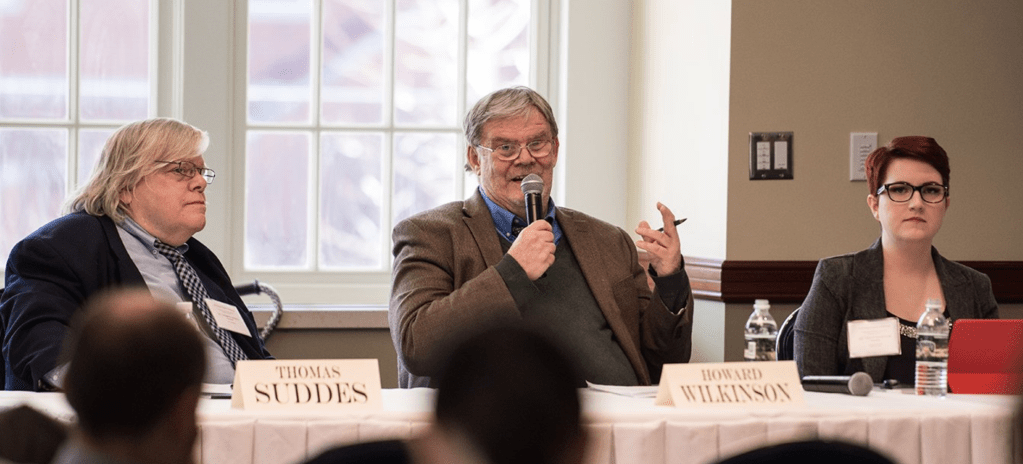
A conference about peace typically invites panelists from war-torn countries or populations clashing overseas. This year, OHIO’s Baker Peace Conference (BPC)—a 30-year leader in international peacekeeping discourse—addressed divisions felt on our own soil, among communities separated by mere miles.
Ingo Trauschweizer led the conference, teaming with OHIO’s E.W. Scripps School of Journalism to host “Populism, the Press, and the Election of 2016” as the conference topic. His hope? A bipartisan, academic discussion to help bridge the gap.
“We [did not address] the man or really even the election,” Trauschweizer says. “We [addressed] the divide in the country and the disconnect that exists even with all the means of communication we have.”
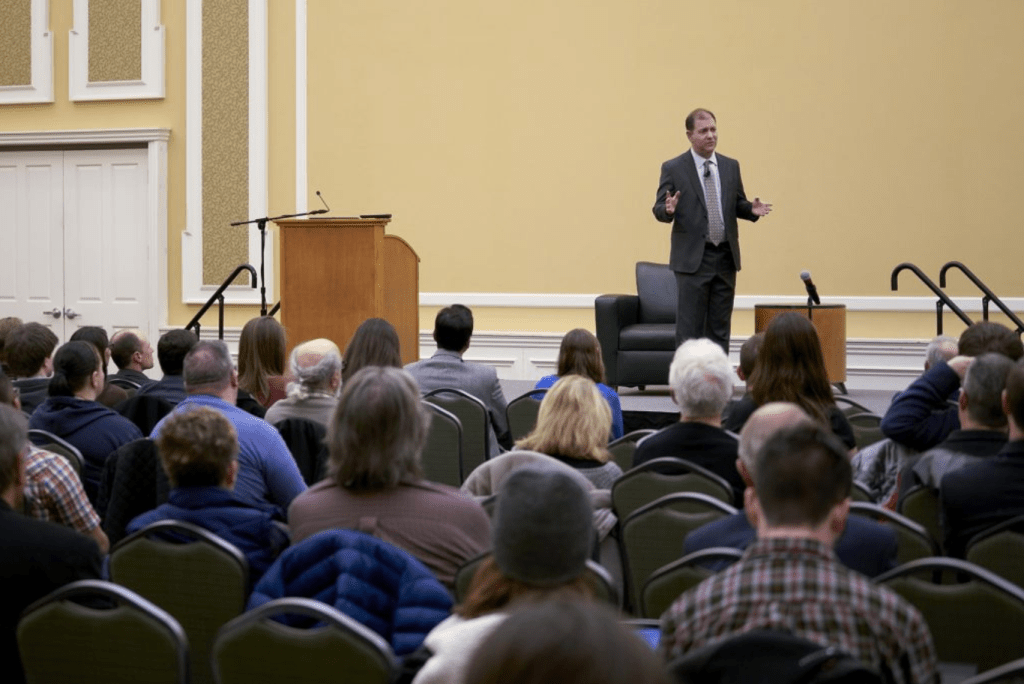
Former CEO of NPR and 2018 BPC keynote Kenneth Stern shared his experience “playing Republican for a year” in his keynote address. The life-long Democrat changed his party registration and the media picks he consumed and set off across the country, exposing himself to republican principles. He outlines the experience in his book, Republican Like Me: How I Left the Liberal Bubble and Learned to Love the Right.
“Since the beginning of time the human race has organized ourselves by tribes. Cultures and people that are nearly identical still manage to hate each other,” said Stern. “It’s easy to hate people we think are so different than us; it’s harder once you realize you share common ground.”
Stern argued that patterns of isolation and confirmation bias have negative effects on our ability to dialogue effectively. Trauschweizer agrees.
“Peacekeeping isn’t walking down the street banging on drums. It starts with real discussions about what efforts are needed to get to a more stable world.”
– Ingo Trauschweizer, director of OHIO’s Contemporary History Institute (CHI)
Making space for opposing ideologies to dialogue is what makes the BPC a leader among scholarly peace conferences. It brings together experts from diverse backgrounds and industries to disagree with each other in a respectful—and productive—way. The effort gives attendees—community members and OHIO students, faculty and staff—examples of the act of civil discourse.
The Baker Peace Studies program also has built significant social capital in areas of contemporary history and political science for 30 years, elevating OHIO in national prominence and matching or surpassing prominent Ivy League programs nationwide.
“We are able to hit far above our weight class,” Trauschweizer says. “We have a solid base with the endowment that other schools don’t have, and so the baseline we are able to build upon sets us up to succeed.”
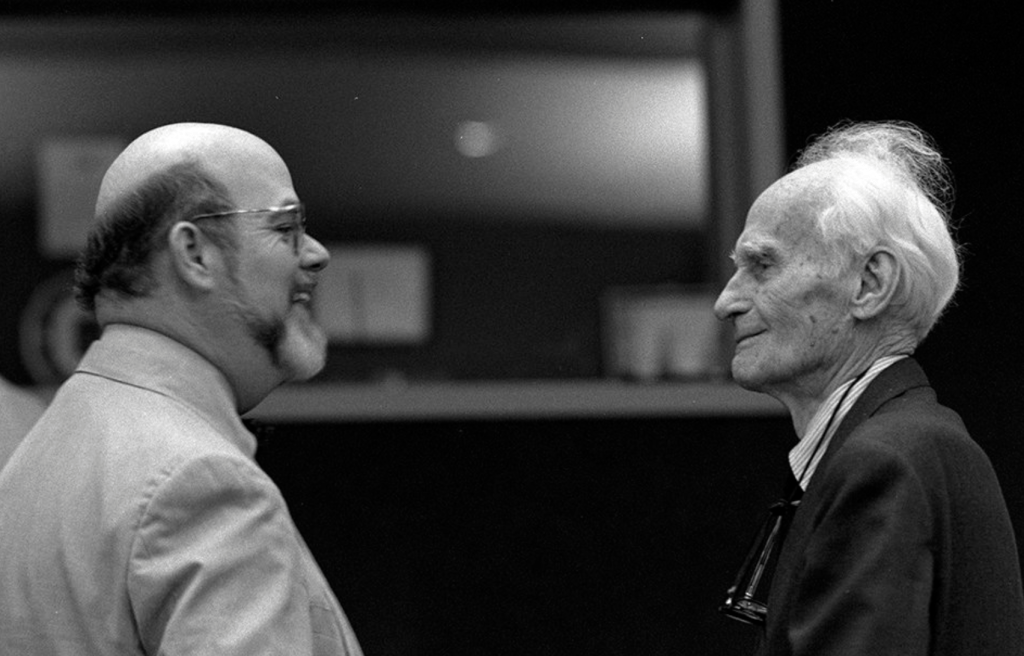
The Baker Peace Conference was established through an endowed gift by former Ohio University President John C. Baker and his wife, Elizabeth. Their vision, in collaboration with support from President Emeritus Charles J. Ping and CHI founder John Gaddis, laid the foundation so the effort can thrive today. Trauschweizer and Professor Steven Miner, along with continued involvement from the Baker family, keep the Baker Peace Studies Program, publications, fellowships for graduate students, and additional student support humming.
“It is terribly difficult to get a new program off the ground, to create something new,” says Miner, chair of the Baker Peace Program. “When someone comes along with the vision, oomph, political muscle, and intellectual capacity to get things done, it is transformative.”
The BPC has examined timely international issues relating to peace—from feminism to violence and religion—throughout its 30-year history. Many topics have re-emerged to take center stage.
“This is exactly what students are here to do—develop critical thinking and communication skills,” says Trauschweizer. “We want to inspire students to take historically informed perspectives on current events out into the world where they can make an impact.”

The article above was published in OHIO Today magazine, and can be found here https://www.ohio.edu/news/2018/05/daring-dialogue.
 hailee tavoian
Leave a comment